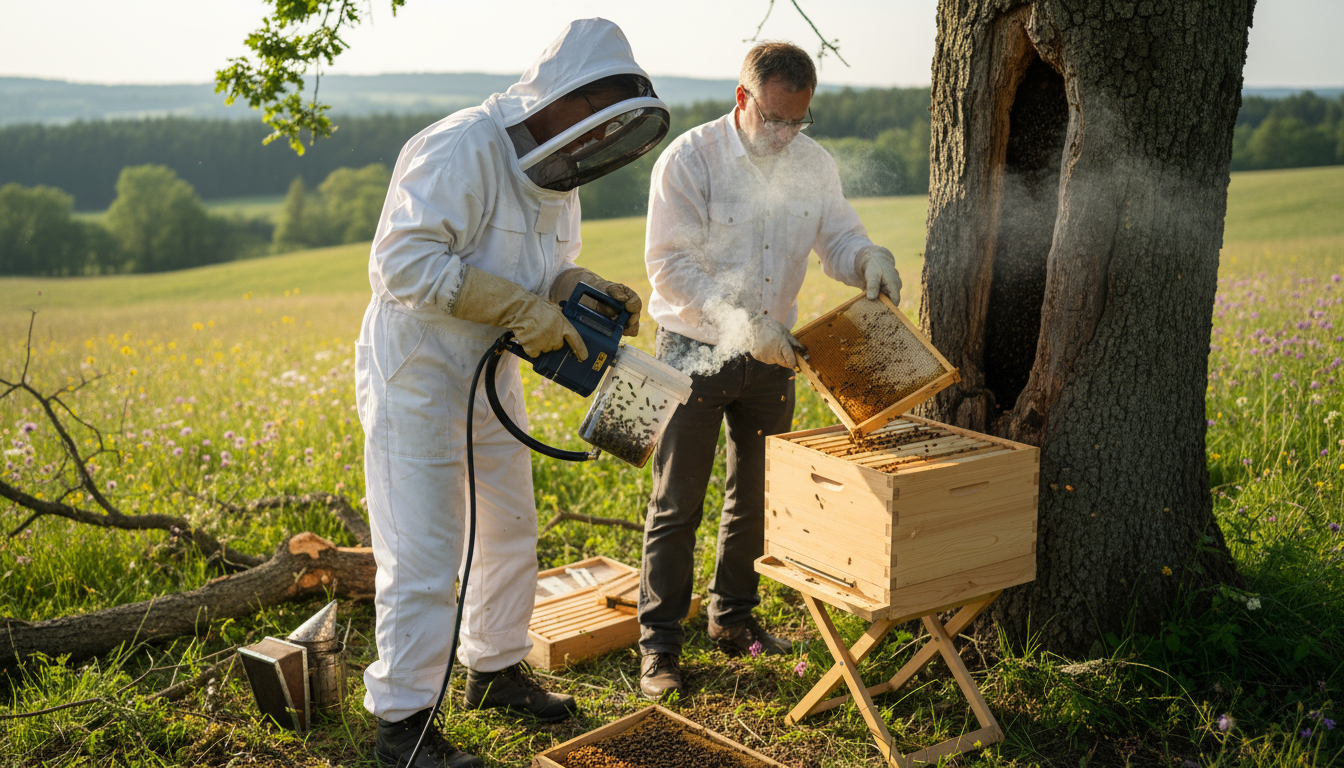
So, you’ve got some buzzing visitors and you’re wondering how to encourage them to find a new home without, well, harming them.
That’s awesome, and honestly, it’s the best approach! Bees are super important for our planet, doing all that vital pollinating work that keeps our gardens growing and our food supply healthy.
But, of course, having a hive in your wall or a nest under your porch can be a real headache, and sometimes even a risk, especially if someone in your family has allergies.
You’re not alone in wanting a gentle solution. A lot of folks are looking for ways to handle these situations humanely, and that’s exactly what we’re going to dive into.
We’ll talk about how to figure out what kind of bee you’re dealing with, what you can try yourself, and when it’s definitely time to call in a pro.
The goal here is to give you all the info you need to safely and kindly get those bees to relocate, keeping both your home and these amazing insects safe. Let’s get started!
First Things First: Is It Really a Bee? (And Why It Matters!)
Before you do anything, it’s super important to make sure you’re actually dealing with bees.
Why? Because wasps and hornets, while also buzzing insects, behave differently, can be more aggressive, and usually require a different approach for removal.
Plus, wasps and hornets aren’t pollinators in the same way bees are, and they don’t have the same protected status.
Bees vs. Wasps vs. Hornets: A Quick Guide
It can be tricky to tell them apart, but here are a few clues:
- Bees: Generally rounder and fuzzier, often with stripes. They’re usually busy collecting pollen, so you’ll often see pollen baskets on their legs (especially honey bees). They’re not usually aggressive unless their nest is directly threatened. Their nests are often made of wax (honeycomb) or are simple holes in the ground or wood.
- Wasps: Tend to be sleeker, with a shiny, narrow waist. They don’t have all that fuzz. They’re often yellow and black, but can be darker. Wasps are usually more aggressive and can sting multiple times. Their nests are often papery (like hornets) or mud-like, and you might see them hanging from eaves or in sheltered spots.
- Hornets: These are a type of large wasp. They’re usually bigger and bulkier than other wasps, often black and white, or black and yellow/orange. They build large, papery nests, often in trees, shrubs, or sometimes in attics or wall voids. They can be very aggressive, especially near their nest.
Why Identification Changes Everything
Knowing what you’re dealing with is crucial because:
- Behavior: Bees are generally docile unless provoked. Wasps and hornets can be much more territorial and aggressive, increasing the risk of stings.
- Nesting Habits: Different insects build different types of nests in different locations. This affects how you approach removal. You wouldn’t treat a ground bee nest the same way you’d treat a honey bee hive in a wall.
- Humane Approach: Our primary goal here is to protect bees. If it’s a wasp or hornet, while you still might want a humane solution, the urgency and methods can differ significantly. You won’t be calling a beekeeper for a wasp nest, for instance.
So, take a moment, observe from a safe distance, and try to get a good look. What do they look like? Where are they nesting? This information is your first step to a successful, bee-friendly removal.
Understanding Your Buzzing Neighbors: Common Bee Types & Where They Nest
Once you’re pretty sure you’re dealing with bees, the next step is to figure out what kind of bee. This isn’t just for fun; different bees have different nesting habits and social structures, which means the best way to encourage them to move on will vary.
Honey Bees: The Classic Colony Dwellers
These are probably the bees you picture when you hear “bee.” They’re golden-brown, fuzzy, and live in large, highly organized colonies.
- What they look like: About 1/2 inch long, fuzzy, usually golden-brown with black stripes. They’ll often have visible pollen baskets on their hind legs when returning to the hive.
- Where they nest: They’re famous for building those intricate wax honeycomb hives. You’ll often find these in sheltered, dark cavities like hollow trees, old sheds, chimneys, or, unfortunately, inside your house walls, attics, or even under floorboards. If you see a lot of bee activity in one specific spot on your house, like a tiny crack or a vent, it’s a strong indicator of a honey bee colony inside.
- Social structure: They live in huge colonies (thousands!) with a queen, workers, and drones.
- Removal considerations: Because their colonies are so large and they store honey, a professional beekeeper is almost always the best option. They can safely remove the entire colony and relocate them, and importantly, remove the honeycomb to prevent issues like rot, mold, or attracting other pests later.
Bumble Bees: Gentle Giants in Small Nests
Bumble bees are those big, fluffy, slow-moving bees that are just so charming. They’re excellent pollinators too!
- What they look like: Much larger and rounder than honey bees, very fuzzy, usually black and yellow. They have a distinct, loud buzz.
- Where they nest: They prefer to nest in existing cavities that are close to the ground. Think abandoned rodent burrows, dense grass clumps, under sheds, compost piles, or sometimes in birdhouses. Their nests are smaller than honey bee hives, usually only a few hundred bees.
- Social structure: Smaller colonies with a queen, workers, and males. They’re annual; the colony dies off in the fall, and a new queen overwinters to start a fresh colony in the spring.
- Removal considerations: Generally very docile. If their nest isn’t in a high-traffic area, often the best thing to do is just leave them alone. They’ll usually move on by the end of the season. If removal is necessary, a professional can often relocate the nest quite easily. Sometimes, just covering the entrance for a few days can encourage them to find a new spot.
Carpenter Bees: The Wood Borers
These guys are often mistaken for bumble bees because they’re similar in size, but they’re quite different in their habits.
- What they look like: Large, chunky, and black, but with a shiny, hairless black abdomen (bumble bees have fuzzy abdomens). They’ll often hover around wooden structures.
- Where they nest: They don’t eat wood; they bore perfectly round holes (about 1/2 inch in diameter) into unpainted, untreated wood to create tunnels for their eggs. You’ll find these holes in decks, eaves, fascia boards, wooden fences, and outdoor furniture. You might see sawdust (frass) below the holes.
- Social structure: Primarily solitary, though several females might nest in the same area.
- Removal considerations: Since they tunnel into wood, they can cause structural damage over time. Deterring them usually involves sealing existing holes and treating or painting wood. They can be encouraged to leave by blocking their nests once they’ve emerged, or by using certain deterrents.
Ground Bees: Solitary Diggers
As their name suggests, these bees live in the ground. There are many species, and they’re often very docile.
- What they look like: Varies greatly by species, but they’re often smaller than honey bees, less fuzzy, and can be metallic green, black, or striped. You’ll see small, volcano-shaped mounds of dirt with a hole in the center.
- Where they nest: They dig individual burrows in bare patches of soil, often in sunny, well-drained areas. You might see many of them in one area, making it look like a colony, but each bee usually has its own burrow.
- Social structure: Mostly solitary, meaning each female digs and provisions her own nest.
- Removal considerations: They’re incredibly docile and rarely sting unless directly stepped on or handled. They’re also vital pollinators, especially for early spring flowers. The best approach is often to leave them alone; they’re only active for a few weeks in the spring/early summer and then disappear. If you really need them to move, modifying the soil (mulch, planting ground cover) can deter them.
Other Less Common Types (Mason, Leafcutter)
You might also encounter Mason bees or Leafcutter bees.
- Mason Bees: Often metallic blue or green, they nest in pre-existing holes like hollow stems, drilled blocks of wood, or bee houses. They use mud to seal off their nests. Super gentle and excellent pollinators.
- Leafcutter Bees: Resemble honey bees but have a distinct way of carrying pollen on the underside of their abdomen. They cut neat, circular pieces of leaves to line their nests, often in hollow stems or wood. Also very gentle.
For these, if their nests are in an inconvenient spot, you can often provide an alternative bee house nearby to encourage them to move.
Understanding these different types and their habits is your foundation for choosing the right, humane removal strategy.
Assessing the Situation: Where Are They, How Many, and What’s the Risk?
Okay, you’ve got a pretty good idea of what kind of bee you’re dealing with. Now, let’s look at the “where” and “how much” of it all. This assessment helps you decide if you can tackle it yourself or if it’s definitely time to call in the experts.
Location, Location, Location: Nests in Walls, Attics, Trees, Ground
The nest’s location is a huge factor in determining your next steps.
- Inside Walls or Attic: This is often a honey bee colony. It’s one of the trickiest situations because the nest is hidden, inaccessible, and can be very large. Removing bees from a wall without professional help is usually a bad idea. If the colony dies inside the wall, the honey can melt, seep into your drywall, cause structural damage, and attract other pests like ants or rodents. Plus, decaying bees can create a terrible smell.
- Chimneys: Another common spot for honey bees. Similar to wall voids, this requires professional help to safely remove the bees and the hive without blocking your chimney or causing a mess.
- Hollow Trees or Tree Cavities: Often honey bees or bumble bees. If it’s a honey bee colony, and the tree isn’t a hazard or directly next to your home, leaving them alone might be an option. If removal is needed, a professional beekeeper can often perform a “cut-out” or a “trap-out.”
- Under Eaves, Porches, or Sheds: Could be bumble bees, solitary bees, or even wasps (re-check identification!). If it’s a small, non-aggressive bumble bee nest in an out-of-the-way spot, you might be able to leave it alone. For larger or more active nests, professional removal might be needed.
- In the Ground: Almost certainly ground bees. These are usually solitary and very docile. If they’re in a low-traffic area, leaving them alone is best. If they’re right where kids or pets play, you might need to try gentle deterrents.
- In Wood (Decks, Fences, Fascia): Carpenter bees. You’ll see those perfectly round holes. The concern here is structural damage over time, so deterring them and sealing holes is important.
Colony Size and Activity Levels
Take a moment to observe the activity.
- High Activity (hundreds of bees constantly coming and going): This usually indicates a large, established colony, most likely honey bees. The larger the colony, the more complex the removal.
- Moderate Activity (dozens of bees, but not a constant stream): Could be a smaller honey bee colony, a bumble bee nest, or even a group of solitary bees nesting in close proximity.
- Low Activity (a few bees, or only occasional sightings): Might be solitary bees, or perhaps a new, small colony just starting out. This is often easier to manage with DIY methods.
The more bees there are, and the more established the nest, the more likely you’ll need professional assistance.
Your Personal Risk Factors (Allergies, Pets)
This is a big one. Be honest with yourself about the risks.
- Bee Allergies: If anyone in your household (or frequent visitors) has a severe bee allergy, then any bee activity near your home is a higher risk. In this case, even for docile bees, you might want to err on the side of caution and call a professional for quick, safe removal. Don’t try to DIY.
- Children and Pets: Young children and curious pets might not understand the concept of leaving bees alone. A nest in a play area or dog run, even of docile bees, can pose a risk of accidental stings.
- Accessibility: Is the nest easily accessible from a safe distance? Can you observe it without getting too close? If it’s in a precarious spot (high up, in a cramped space), it increases the danger of trying to remove it yourself.
Considering these factors will help you make an informed decision about whether to try a humane DIY approach or to immediately seek professional help. Remember, safety always comes first!
Safety First: Before You Do Anything Else
Okay, you’ve identified your buzzing friends and assessed the situation. Now, before you even think about trying any removal methods, we need to talk about safety. This isn’t just about avoiding a sting; it’s about making sure you don’t get hurt or make the situation worse.
Essential Protective Gear
If you’re going to attempt any DIY deterrents or observation close to the nest, you absolutely need to gear up. Don’t underestimate a bee’s ability to defend its home, even docile ones.
- Bee Suit (or equivalent): The ideal, of course, is a full beekeeper’s suit with a veil. If you don’t have one, you’ll need to create your own protective barrier. Think thick, light-colored clothing. Bees are less agitated by light colors and can get tangled in dark, fuzzy materials.
- Long Sleeves and Pants: Wear a thick, long-sleeved shirt and long pants. Tuck your pants into your socks to prevent bees from crawling up your legs.
- Gloves: Thick gardening gloves, or even leather gloves, are a must.
- Head and Face Protection: This is critical. A wide-brimmed hat with a veil (you can buy these separately) or even a mesh screen over your face is essential. Bees often aim for the face. If you don’t have a veil, wear a hat and consider a bandana or scarf wrapped around your face, leaving only your eyes exposed (and then wear safety glasses!).
- Closed-Toe Shoes: No sandals or open-toed shoes!
- Avoid Perfumes/Scents: Bees can be attracted to or agitated by strong fragrances, so skip the cologne, perfume, and even heavily scented lotions.
When to Not Attempt DIY Removal
Seriously, there are times when you just shouldn’t try to be a hero. Calling a professional is the smartest, safest, and most humane option in these scenarios:
- Known Allergies: As we discussed, if anyone in your home or who regularly visits has a severe bee allergy, do not attempt DIY removal. The risk is too high.
- Large, Established Colonies: If you’re seeing hundreds of bees, constant activity, or suspect a large honey bee hive in a wall, chimney, or attic, this is beyond DIY. These require specialized equipment and expertise to remove safely and completely.
- Aggressive Behavior: While most bees are docile, if they seem agitated, are dive-bombing you, or are generally acting aggressive even when you’re at a distance, do not approach. This is a sign they feel very threatened.
- Inaccessible Nests: If the nest is high up in a tree, inside a wall, in a chimney, or in any other spot that requires a ladder, specialized tools, or entry into a confined space, call a pro. You risk falling, getting stuck, or simply being unable to reach the nest safely.
- Uncertainty About Bee Type: If you’re still not sure if it’s a bee, wasp, or hornet, it’s better to get a professional opinion. Misidentification can lead to inappropriate and potentially dangerous removal attempts.
- You’re Uncomfortable or Scared: It’s okay to admit you’re not comfortable. Bee removal, even humane removal, can be intimidating. If you’re feeling anxious, you’re more likely to make mistakes.
Remember, the goal is humane removal, not to prove your bravery. Sometimes, the most responsible and humane action is to bring in someone who does this professionally and safely.
Humane DIY Methods: How to Encourage Bees to Move On (Without Harming Them)
Alright, if you’ve determined it’s a small, manageable situation, and you’re geared up for safety, there are several gentle ways you can encourage bees to find a new home. The key here is deterrence, not destruction. We want to make their current spot less appealing.
The Power of Smoke (for Honey Bees)
This is a classic beekeeper trick, but it needs to be used with caution and only for honey bees that have an accessible hive entrance.
- How it works: When bees smell smoke, their instinct is to think there’s a forest fire. They gorge themselves on honey (to have energy to flee and rebuild) and become more docile and less likely to sting. It essentially distracts them and makes them less aggressive.
- How to use it: You’ll need a bee smoker (a specialized tool beekeepers use) or something that produces a cool, white smoke (not flames!). You can burn natural materials like dry leaves, pine needles, or untreated wood shavings.
- Wearing all your protective gear, approach the hive entrance calmly.
- Puff a few gentle wisps of smoke directly into the entrance. Don’t overdo it; a little goes a long way.
- Wait a few minutes. You should see a reduction in aggressive behavior.
- The idea isn’t to smoke them out permanently, but to calm them down so you can perhaps seal an entry point after they’ve left for the day, or to prepare for a professional removal.
- Important: This is not a standalone removal method. It’s a way to manage bee behavior for short periods. If you’re trying to get them to leave permanently, you’d combine this with other methods, like sealing entry points (see below), but only after you’re sure they’ve all left the nest.
Essential Oils & Natural Repellents
Bees are sensitive to strong smells, and some essential oils can act as deterrents. These are generally best for preventing bees from nesting or encouraging them to leave a small, new nesting site.
- Peppermint Oil: Bees generally dislike the strong scent of peppermint.
- How to use: Mix 10-15 drops of peppermint essential oil with water in a spray bottle. Spray around areas where you want to deter bees, like under eaves, around windows, or on wooden surfaces where carpenter bees might bore. Reapply frequently, especially after rain.
- Citronella: Often used to deter mosquitoes, it can also deter bees.
- How to use: Citronella candles or oil diffusers can be placed near areas you want to keep bee-free. You can also mix citronella oil with water and spray it.
- Cinnamon: Bees aren’t fans of cinnamon.
- How to use: Sprinkle ground cinnamon around potential nesting sites or entry points. You can also make a spray with cinnamon essential oil.
- Garlic: Another strong scent bees tend to avoid.
- How to use: Crush garlic cloves and place them near the nest entrance. You can also make a garlic spray by steeping crushed garlic in water, straining it, and then spraying the liquid.
- Important: These repellents work best as a deterrent or for very small, new nests. They are unlikely to make a large, established colony pack up and leave. They require consistent reapplication.
Vinegar Spray: A Cautionary Note
While often listed as a bee deterrent, vinegar is more of a repellent that can actually harm bees if directly sprayed on them.
- How it works: The strong acidic smell is unpleasant for bees.
- How to use: Mix equal parts white vinegar and water in a spray bottle. Spray it around areas you want to deter bees from.
- Caution: DO NOT spray vinegar directly on bees or their nest. While it’s natural, it can be harmful and even lethal to them, which goes against our goal of humane removal. Use it only as a perimeter deterrent. It can also harm plants, so be mindful where you spray.
Water Sprays: A Gentle Deterrent
For bees that are just “hanging out” in an unwanted spot (e.g., a swarm resting temporarily, or a few bees exploring), a gentle water spray can often encourage them to move on.
- How it works: It’s not harmful, but bees don’t like getting wet. It disrupts their flight and makes them uncomfortable.
- How to use: Use a garden hose with a gentle spray setting (like a mist or shower, not a jet stream). Lightly mist the area where the bees are.
- Important: This is for deterrence, not removal. It won’t get rid of an established nest. Avoid spraying directly into a nest if possible, as it could agitate them.
Creating Unfavorable Conditions (Light, Sound, Blocking Access)
Sometimes, simply making the area less appealing can encourage bees to leave.
- Light: Bees prefer dark, sheltered spaces for nesting. If a nest is in a dark cavity (like a shed or attic corner), shining a bright light into the area can make it less desirable. This might work for smaller nests or early stages of a colony.
- Sound/Vibration: Some suggest that constant vibration or loud noise can disturb bees enough to leave. This is less scientifically proven but might be worth trying for a few days if other methods aren’t working and you can safely generate noise without disturbing your neighbors too much.
- Blocking Access (Carefully!): This is a critical one. If bees are entering a hole in your wall or eave, you might be tempted to just seal it up. DON’T DO THIS IF BEES ARE STILL INSIDE! If you seal them in, they’ll either die inside (causing odor, rot, and attracting pests) or find another way into your house.
- The RIGHT way to block access: Observe the bees for several days. Wait until dusk or dawn when most of the bees have left the nest to forage, or when they are all inside. Once you’re certain the majority are out (or in), you can then seal the entry point with caulk, wood putty, or steel wool. For honey bees, this is usually best done after a professional has removed the hive. For carpenter bees, you’d seal their holes after they’ve emerged from their tunnels.
The “Bait and Switch” (for attracting them elsewhere)
This is more about attracting bees to a more desirable location rather than deterring them from an unwanted one.
- How it works: You offer them a new, attractive home that’s away from your living space.
- How to use: If you have a swarm of honey bees that has just landed temporarily, you could try placing an empty “swarm trap” (a small box with a small entrance, sometimes scented with lemongrass oil to mimic a suitable hive) in a tree nearby, away from your home. Swarms are looking for a new home, and they might choose your trap.
- Important: This is usually for swarms (a ball of bees clinging to a branch or structure), not established nests. If you successfully attract a swarm, you’ll still need a beekeeper to come and collect the trap and relocate them.
Physical Barriers & Exclusion (for Carpenter Bees)
Since carpenter bees bore into wood, the best humane strategy is to make your wood less appealing.
- Paint or Varnish: Carpenter bees prefer unpainted, untreated wood. Painting or varnishing exposed wooden surfaces (decks, eaves, fences) can significantly deter them.
- Seal Existing Holes: Once the carpenter bees have emerged from their tunnels (usually in late spring/early summer), fill their existing holes with wood putty or caulk. This prevents new bees from using the same tunnels and also deters new ones from drilling nearby.
- Install Netting: For particularly vulnerable wooden structures, you might consider fine mesh netting during their active season to prevent them from accessing the wood.
For Ground Bees: Changing Soil Conditions & Landscaping
Ground bees are usually very docile and temporary. If you need them to move, modifying their habitat is the best way.
- Mulch: Cover bare patches of soil where ground bees are nesting with a thick layer of mulch (wood chips, straw, gravel). Ground bees prefer bare soil for digging their burrows.
- Plant Ground Cover: Plant dense ground cover, grass, or other plants in the areas where they’re nesting. This makes the soil unsuitable for burrowing.
- Watering: Ground bees prefer dry, well-drained soil. Regularly watering the area can make it less appealing for them to nest. Do this for a few days, and they’ll often move on.
- Important: Remember, ground bees are excellent pollinators and are usually only active for a few weeks. If their nests aren’t in a high-traffic area, leaving them alone is often the easiest and most bee-friendly solution.
Patience is key with these DIY methods. Bees are persistent, and it might take several attempts or a combination of strategies to encourage them to move on. Always prioritize your safety and the bees’ welfare.
When to Call the Pros: Connecting with Humane Bee Removal Experts
Sometimes, despite your best efforts, or because the situation is simply too big or too risky, DIY isn’t the answer. That’s when it’s time to bring in the experts. And when we say “experts,” we mean people who specialize in humane bee removal, not just any pest control company that might reach for the insecticide.
Why Professional Help is Often Best
There are several compelling reasons to call in the pros, especially for larger or more complex bee situations:
- Safety: Professionals have the right gear, training, and experience to handle bees safely, minimizing the risk of stings to themselves, you, and your family.
- Expert Identification: A pro can accurately identify the type of bee (or wasp/hornet) and determine the best, most humane course of action.
- Specialized Tools & Techniques: They have access to specialized equipment like inspection cameras for wall voids, vacuum systems designed for live bee removal, and tools to safely access high or difficult-to-reach nests.
- Complete Removal (Especially for Honey Bees): For honey bee colonies, it’s not enough to just remove the bees; the honeycomb and honey must also be removed, especially from inside structures. If left behind, honey can melt, seep into walls, cause structural damage, create foul odors, and attract other pests (ants, rodents, wax moths). A professional beekeeper knows how to do this thoroughly.
- Relocation Expertise: Humane bee removal specialists and beekeepers are committed to relocating the bees to a new, safe environment where they can continue to thrive and pollinate.
- Prevention Advice: After removal, they can offer expert advice on how to seal entry points and prevent future infestations.
What to Look for in a Beekeeper or Humane Pest Control
Not all pest control companies are created equal when it comes to bees. You want someone who prioritizes humane removal.
- Start with Beekeepers: Your first call should always be to local beekeeping associations or individual beekeepers. Many beekeepers offer swarm collection and hive removal services, and they are usually the most passionate about saving the bees. They’ll often do it for free or a nominal fee, especially for accessible swarms. For established hives in structures, there will be a charge, as it’s labor-intensive.
- Ask Specific Questions: When you call, clearly state that you want humane, live bee removal and relocation. Ask:
- “Do you offer live bee removal and relocation?”
- “What methods do you use to ensure the bees are not harmed?”
- “Do you remove the entire hive/comb, especially for nests in walls?” (Crucial for honey bees in structures).
- “Are you licensed and insured?”
- “Can you provide an estimate?”
- Check for Specialized Pest Control: If you can’t find a beekeeper for a complex job, look for pest control companies that specifically advertise “humane bee removal” or “live bee removal.” Avoid companies that only offer extermination.
- Get Multiple Quotes: Like any service, it’s a good idea to get a few quotes to compare services and prices.
What to Expect During a Professional Removal
When a professional comes, here’s a general idea of what might happen:
- Assessment: They’ll first assess the situation, identify the bee type, locate the nest, and determine the best removal strategy.
- Preparation: They’ll put on full protective gear and prepare their specialized tools (smoker, vacuum, cutting tools, containers for bees and comb).
- Accessing the Nest: For nests in walls or attics, this might involve carefully cutting into drywall or removing fascia boards. They’ll do their best to minimize damage.
- Live Removal:
- For swarms: They’ll usually gently scoop or shake the swarm into a special box.
- For established hives: They might use a bee vacuum (a low-suction vacuum designed not to harm bees) to collect the bees, or carefully cut out sections of honeycomb with bees attached.
- They’ll collect the queen, as the rest of the colony will follow her.
- Comb Removal (Honey Bees): If it’s a honey bee hive, they will meticulously remove all the honeycomb and honey. This is crucial to prevent future problems.
- Relocation: The collected bees and comb will be transported to a new location, usually an apiary (a beekeeper’s bee yard), where they can safely establish a new hive.
- Sealing & Repair (Optional): Some professionals might offer to seal the entry points after removal. For structural damage (like cut drywall), you’ll likely need to arrange for repairs yourself. Discuss this beforehand.
Hiring a professional might cost more upfront than DIY, but it provides peace of mind, ensures safety, and most importantly, gives those valuable bees a second chance at life.
Prevention is Key: Keeping Bees from Becoming Unwanted Guests
Once you’ve successfully (and humanely!) removed bees from your property, the next step is to make sure they don’t decide to move back in, or that new colonies don’t find your home appealing. Prevention is often easier than removal!
Sealing Entry Points
This is probably the most crucial step, especially for honey bees and carpenter bees.
- Inspect Your Home Thoroughly: Walk around your house, paying close attention to eaves, soffits, fascia boards, window frames, door frames, utility lines entering the house, and any cracks or gaps in your siding or foundation.
- Caulk and Seal: Use good quality exterior caulk to seal any cracks, gaps, or holes you find. Don’t forget around pipes, wires, and vents.
- Repair Damaged Wood: Replace or repair any rotting or damaged wood, as this is particularly attractive to carpenter bees and can also provide easy entry for other bees looking for a home.
- Screen Vents and Chimneys: Install fine mesh screens over attic vents, dryer vents, and chimney openings. Make sure the mesh is small enough to keep bees out but still allows for proper airflow.
- Check for Old Nests: If you’ve had a bee problem before, thoroughly clean and seal the area where the old nest was. Bees use scent to communicate, and residual scent can attract new swarms.
Regular Home Maintenance
A well-maintained home is generally less appealing to bees looking for shelter.
- Keep Gutters Clean: Clogged gutters can lead to water damage and rotting wood, creating ideal nesting sites.
- Trim Trees and Shrubs: Keep branches trimmed away from your house. Overhanging branches can provide easy access to your roof, attic, or other entry points.
- Inspect Outbuildings: Don’t forget sheds, garages, and other outbuildings. Seal any gaps or holes in these structures too.
Thoughtful Landscaping & Planting
You can actually deter bees from certain areas of your yard while still supporting them overall.
- Plant Bee-Friendly Flowers Away from the House: If you want to attract bees (which is great!), plant their favorite flowers (like lavender, coneflowers, clover, sunflowers) further away from your main living areas, especially near your property’s edges. This draws them to a safe distance.
- Use Deterrent Plants Near Your Home: Some plants have scents that bees dislike. Consider planting these near your patio, entryways, or around areas where you don’t want bees:
- Mint: Bees aren’t fond of the strong scent.
- Citronella Grass: Known for insect-repelling properties.
- Marigolds: Their strong scent can deter various insects.
- Geraniums: Some varieties have a scent bees avoid.
- Manage Bare Soil: For ground bees, cover bare patches of soil with mulch or plant ground cover. This removes their preferred nesting habitat.
- Clean Up Fallen Fruit: If you have fruit trees, promptly clean up any fallen fruit. Fermenting fruit can attract bees and wasps looking for sugar.
Managing Food and Water Sources
Bees, like all living creatures, need food and water. If they find it readily available near your home, they might stick around.
- Secure Trash Cans: Keep outdoor trash cans tightly sealed, especially if they contain sugary drinks or food waste.
- Clean Up Spills: Promptly clean up any sugary spills from outdoor entertaining, BBQ areas, or around pet food bowls.
- Repair Leaky Faucets/Hoses: Bees need water, especially in hot weather. Leaky outdoor faucets, bird baths, or pet water bowls can become a regular water source. If you want to provide water for bees, do so in a designated, shallow dish with pebbles or marbles (so they don’t drown) away from your home.
- Bird Feeders: While bird feeders aren’t usually a primary attractant for bees, sometimes spilled seeds or sugar water from hummingbird feeders can draw them in. Keep these areas clean.
By taking these proactive steps, you’re not just preventing future bee problems; you’re also making your home more secure and well-maintained overall. It’s a win-win!
Conclusion
So, there you have it! Dealing with bees around your home can feel a bit daunting, but as you can see, there are plenty of humane and effective ways to encourage them to move on without resorting to harmful chemicals. Remember, these little buzzing creatures are absolutely vital for our ecosystem, so treating them with respect and finding a gentle solution is always the best path forward.
We’ve covered a lot, from figuring out if it’s even a bee in the first place, to understanding their different types and where they like to nest. You’ve now got a toolkit of DIY methods, like using essential oils, creating unfavorable conditions, or making sure your wood is less appealing. And, critically, we’ve talked about when it’s just safer and smarter to call in the pros—those amazing beekeepers and humane removal specialists who can safely relocate a colony.
Ultimately, the goal is peaceful coexistence. By being observant, patient, and choosing the right strategy for your specific situation, you can protect your home, keep your family safe, and ensure those valuable pollinators continue their important work. Thanks for caring enough to find a kind solution!
Frequently Asked Questions (FAQ)
Got more questions buzzing around your head? Let’s tackle some common ones.
Will bees leave on their own?
Sometimes, yes, especially for certain situations.
- Swarm: A honey bee swarm (a ball of bees clinging to a surface) is usually temporary. They’re just resting while scout bees look for a new permanent home. They’ll often move on within a few hours to a few days.
- Bumble Bees & Ground Bees: Their colonies are annual. The bees will die off in the fall, and the nest will be abandoned. If the nest isn’t in a high-traffic area, leaving them alone for the season is often the best, most humane choice.
- Established Hives (Honey Bees): An established honey bee hive in a wall or tree cavity will not leave on its own. They’re there to stay and will grow larger over time. These always require intervention.
What smells do bees hate?
Bees are generally sensitive to strong, pungent smells. Some scents they tend to avoid include:
- Peppermint: A popular essential oil for deterrence.
- Citronella: Often used in candles and sprays.
- Cinnamon: Ground cinnamon or essential oil can be used.
- Garlic: Its strong odor can be off-putting.
- Eucalyptus: Another strong-smelling essential oil.
Keep in mind these are generally deterrents for preventing bees from nesting or for encouraging them to leave a small area. They’re unlikely to dislodge a large, established colony.
Can I spray bees with water to get rid of them?
You can use a gentle mist of water from a hose to deter bees that are just “hanging out” or exploring an area. Bees don’t like getting wet, so it can encourage them to move on without harming them.
However:
- Do not use a strong jet of water. This can agitate them and be harmful.
- It will not remove an established nest. This is only a temporary deterrent for individual bees or small groups.
- Avoid spraying directly into an active nest, as this can make the bees aggressive.
How do I know if it’s a bee or a wasp nest?
Look closely at the nest’s construction and the insects themselves:
- Bee Nests:
- Honey Bees: Build wax honeycomb, often hidden inside cavities (walls, trees).
- Bumble Bees: Nests are usually messy clumps of wax cells, often in the ground or dense grass.
- Carpenter Bees: Bore perfectly round holes in wood; no visible external nest structure.
- Ground Bees: Small, volcano-shaped mounds of dirt with a central hole in bare soil.
- Wasp Nests:
- Paper Wasps: Open, umbrella-shaped comb, often hanging from eaves or branches.
- Yellowjackets/Hornets: Enclosed, papery, football-shaped nests, often in trees, shrubs, or sometimes underground.
- The Insects:
- Bees: Fuzzy, rounder bodies, often with pollen baskets on legs.
- Wasps/Hornets: Sleeker, shinier bodies, narrow “waist,” less hairy.
If you’re still unsure, observe from a safe distance and consider calling a professional for identification.
Is it illegal to kill bees?
In many places, it’s not explicitly illegal to kill bees, but it is highly discouraged due to their critical role as pollinators. Some regions or specific bee species might have protected status. More importantly, using pesticides can be harmful to the environment, other beneficial insects, and even pets and humans.
The general consensus among environmentalists, gardeners, and even many pest control experts is to always seek humane removal and relocation options for bees whenever possible, especially honey bees. It’s the responsible and eco-friendly choice.